Why Installation Quality Matters as Much as Material Quality
New roofing materials are designed to provide reliable protection for many years, but their performance depends heavily on how they are installed. Even high-quality tiles, slates, membranes and leadwork can deteriorate prematurely when preparation, fixing or detailing is incorrect.
A roof functions as one connected system. The covering, underlay, battens, fixings, ventilation and drainage details must all work together. For property owners in Witney, Oxfordshire, professional installation is therefore fundamental to achieving the expected performance from a new roof.
Incorrect Roof Preparation Can Create Early Weaknesses
Before new materials are installed, the underlying roof structure must be assessed and prepared. Covering damaged decking, weakened battens or uneven timbers can create movement and prevent the new surface from sitting correctly.
Suitable preparation may involve:
- Checking the roof structure for movement
- Replacing damaged decking or battens
- Creating an even fixing surface
- Removing unsuitable previous materials
- Confirming that junctions can be detailed correctly
- Planning ventilation and drainage routes
Problems hidden beneath a new covering will not disappear. They may instead place stress on the replacement materials from the outset.
Poorly Installed Underlay Can Allow Moisture Through
Roofing underlay provides secondary protection beneath tiles or slates. It helps manage small amounts of moisture that pass the external covering and contributes to the roof’s overall weather resistance.
If the underlay is torn, inadequately overlapped or poorly secured, water may reach the battens and roof structure. Excessive sagging can also allow moisture to collect rather than drain towards the roof edge.
Because underlay becomes concealed during installation, correcting defects later may require sections of the finished covering to be lifted.
Incorrect Batten Spacing Affects the Roof Covering
Battens provide fixing points and support for many tiled and slated roofs. Their spacing must suit the dimensions, headlap and layout of the selected covering.
Incorrectly positioned battens can cause:
- Insufficient overlap between tiles
- Uneven courses
- Poor alignment
- Inadequate fixing points
- Gaps vulnerable to wind-driven rain
- Unnecessary stress on individual materials
A roof may initially look complete while still containing weaknesses that become apparent during prolonged rainfall or strong winds.
Inadequate Fixing Can Lead to Tile Movement
Tiles and slates must be secured using an appropriate fixing method for the roof design and level of exposure. Insufficient, unsuitable or incorrectly placed fixings can allow materials to lift, rattle or slip.
Once one tile moves, the overlapping arrangement may be interrupted. Wind can then reach beneath surrounding materials, increasing the likelihood of further displacement.
Over-fixing can also be harmful. Excessive force may crack tiles or slates around fixing points, creating weaknesses that develop after installation.
Unsuitable Materials for the Roof Pitch
Not every tile or slate is appropriate for every roof. The roof pitch influences how quickly water drains and how much overlap is required between courses.
If a covering is used below its suitable pitch, wind-driven rain may enter between the units even when they appear correctly aligned. A steeper or unusually shaped roof may create different fixing and detailing requirements.
Material selection should therefore consider:
- Roof pitch
- Covering size and profile
- Required overlap
- Weight
- Fixing method
- Junction details
- Exposure to wind and rain
Selecting materials by appearance alone can compromise performance.
Poor Flashing Details Can Cause Persistent Leaks
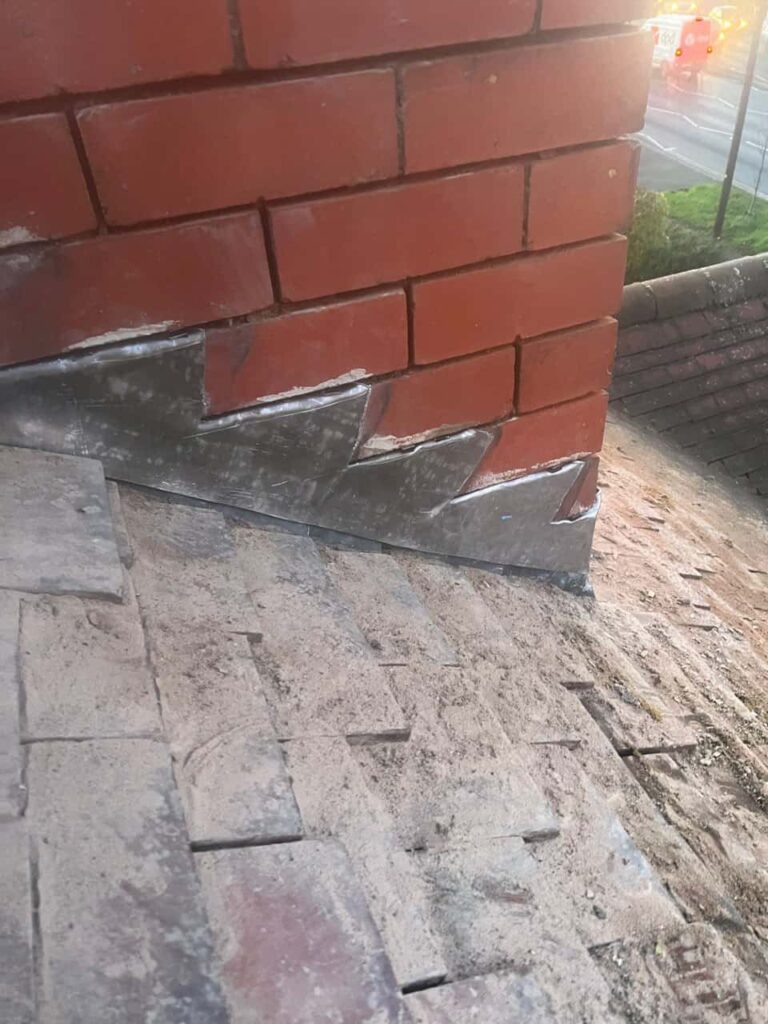
Leadwork and other flashing materials protect vulnerable junctions around chimneys, walls, valleys and roof penetrations. These areas need careful shaping, secure fixing and sufficient overlap.
Common installation defects include:
- Flashing that is too short
- Shallow or inconsistent overlaps
- Poorly formed corners
- Inadequate connection with adjoining materials
- Sections that cannot expand naturally
- Reliance on surface sealant instead of correct detailing
Water entering through defective flashing can spread beneath an otherwise sound new roof, potentially affecting concealed materials before the leak becomes visible indoors.
Inadequate Ventilation Can Encourage Condensation
A roof must manage moisture from inside the property as well as rain from outside. Poorly planned ventilation can allow warm, moisture-laden air to collect within the roof space and condense on colder surfaces.
Persistent condensation may dampen insulation, underlay and timbers. It can also be mistaken for an external roof leak.
Ventilation should be treated as part of the complete roofing design. Simply installing new tiles or membranes without considering airflow may leave the roof vulnerable to moisture from within.
Drainage Defects Place Materials Under Unnecessary Pressure
A new roof must direct water efficiently towards gutters and outlets. Incorrect falls, poorly formed valleys or badly positioned drainage components can cause water to collect in areas that should remain clear.
Prolonged standing or overflowing water may affect:
- Roof junctions
- Fascias and soffits
- Tile edges
- Flat roof coverings
- Flashing details
- Adjoining wall surfaces
Correct installation ensures that each part of the roof directs water towards a suitable discharge point rather than allowing it to accumulate.
Poorly Finished Ridges and Verges Can Become Vulnerable
Ridges and verges are exposed parts of the roof and require secure, consistent installation. Incorrectly fixed units or poorly applied mortar can loosen under repeated weather exposure.
Movement at these points may allow water beneath the covering or create openings where wind can place pressure on neighbouring materials. Professional detailing helps these exposed sections perform as part of the complete roof system.
Flat Roofing Requires Consistent Bonding and Detailing
Flat roof systems depend on careful substrate preparation, secure seams and correctly detailed edges and penetrations. Wrinkles, poorly bonded sections or trapped moisture can create weak points.
Drainage is especially important because low spots may retain water. If the supporting deck has not been prepared evenly, the new covering may experience prolonged moisture exposure in these areas.
Early Signs of Installation Problems
Warning signs can emerge soon after installation or develop gradually. They may include:
- Tiles or slates moving repeatedly
- Uneven roof lines
- Leaks around junctions
- Loose ridge or verge components
- Water collecting on flat sections
- Dampness in the loft
- Condensation on internal roof surfaces
- Guttering that overflows despite being clear
- Visible gaps or poorly aligned materials
These symptoms should be assessed before moisture affects a wider area.
Why a Complete Roof Assessment Matters
When a relatively new roof develops problems, replacing the visibly damaged component may not resolve the cause. The surrounding installation should be checked to determine whether the defect is isolated or repeated throughout the roof.
A professional assessment can examine the materials, fixings, overlaps, flashing, ventilation and drainage as connected elements. This provides a more dependable basis for corrective work.
Conclusion
Poor installation can shorten the serviceable life of new roofing materials by allowing movement, water ingress, condensation and uneven stress. Incorrect preparation, fixing, overlaps, flashing and drainage can all undermine materials that would otherwise perform reliably.
If a newer roof in Witney, Oxfordshire, is showing signs of premature deterioration, LJ Roofing Witney can inspect the installation and identify the underlying issue. A thorough assessment can help ensure that corrective work addresses the cause rather than only the visible symptom.
Call us on: 01993 463 478
Click here to find out more about LJ Roofing Witney
Click here to complete our contact form and see how we can help with your roofing needs.