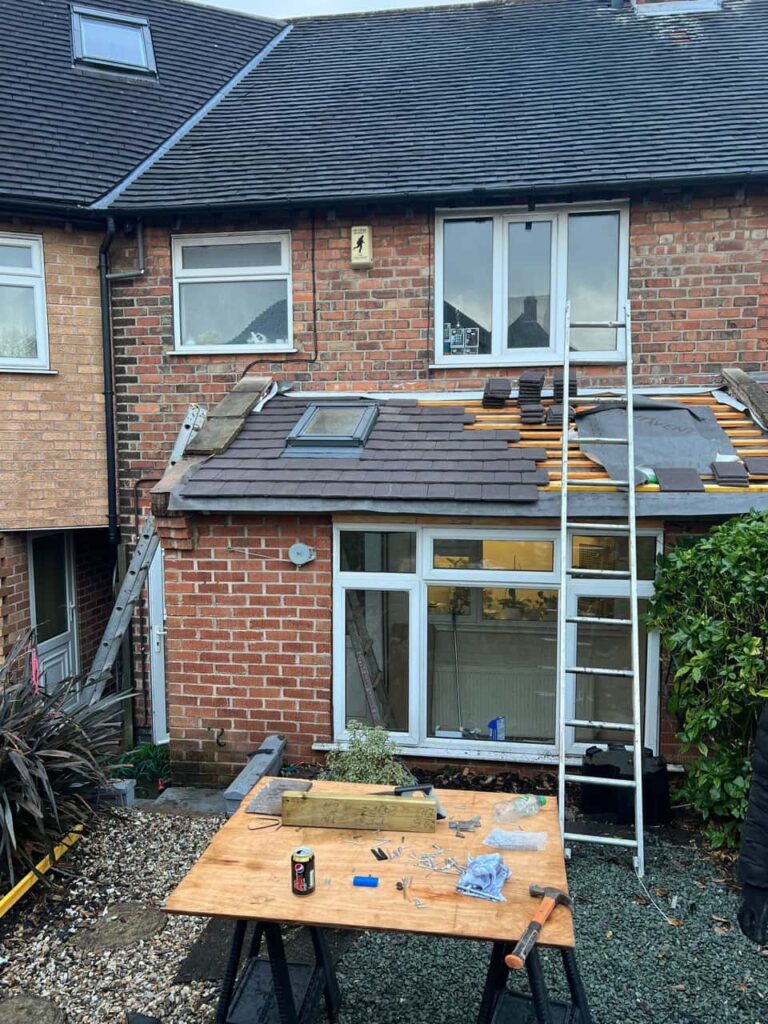
An individual roofing defect can often be resolved with a focused repair. However, when cracked tiles, weakened mortar, failing flashing and deteriorated underlay are affecting several parts of the same roof, treating each symptom separately may not provide a dependable result.
For property owners in Witney, Oxfordshire, addressing widespread roof deterioration as one carefully planned project allows the different components to be assessed and restored together. The decision should always follow a professional inspection, as extensive work is unnecessary when defects remain genuinely localised.
Why a Coordinated Approach Can Be More Effective
1. Connected Defects Can Be Addressed Together
Roofing components do not work independently. Tiles protect the underlay, battens support the covering, flashing seals vulnerable junctions, and valleys direct rainwater towards the drainage system.
If several of these elements have deteriorated, repairing one area may leave another weakness nearby. A coordinated project allows the contractor to consider how the defects are connected and restore the roof as a complete weather-resistant system.
2. Hidden Damage Becomes Easier to Identify
The full condition of a roof is not always visible from outside. Moisture may have affected the underlay, battens or accessible timbers even though the tiles above appear reasonably secure.
Working across the deteriorated section allows materials to be lifted methodically so that concealed components can be examined. Any damaged underlay, weakened battens or unreliable fixings can then be corrected before the new covering is completed.
This reduces the risk of leaving hidden deterioration beneath an otherwise tidy repair.
3. The Finished Roof Can Be More Consistent
A roof repaired repeatedly over many years may contain materials of different ages, conditions and installation standards. Some patches may remain sound while others begin to fail or no longer integrate effectively with the surrounding covering.
Completing related work as one project can create more consistent:
- tile or slate alignment
- fixing methods
- underlay protection
- flashing details
- ridge and verge finishes
- drainage routes
Consistency helps adjoining components work together and makes the completed roof easier to assess and maintain.
4. Water Management Can Be Improved Across the Roof
A roof must do more than stop rain at one visible opening. It needs to move water down the slopes, through valleys and into the rainwater system without allowing it beneath the covering.
Widespread deterioration may affect several points along this route. Displaced tiles, open flashing joints, damaged underlay and blocked valleys can all contribute to water entering or collecting where it should not.
Addressing these areas together enables the roofer to restore the intended drainage path across the affected roof slopes rather than dealing only with the latest indoor damp patch.
5. Future Maintenance Becomes More Straightforward
A roof containing numerous small repairs can become difficult to monitor. When a new issue appears, it may be unclear whether it relates to an old patch, an untreated neighbouring defect or general deterioration.
A coordinated project provides a clearer starting point for future maintenance. Renewed sections can be inspected as one system, and any later changes are easier to identify against a more consistent background.
This does not eliminate the need for maintenance, but it can reduce the uncertainty created by a roof made up of many ageing repairs.
When Should a Larger Project Be Considered?
The number of defects alone does not determine whether widespread work is needed. Their location, cause and effect on the wider roofing system are more important.
A broader assessment may be appropriate when:
- tiles or slates are failing across several slopes
- leaks have appeared in different internal areas
- previous repairs are beginning to deteriorate
- underlay or battens are affected extensively
- ridge, verge and flashing defects occur together
- materials continue moving despite individual repairs
- the roof has become increasingly unreliable during rainfall
If the surrounding materials remain sound, targeted repairs may still be entirely suitable.
Why Professional Assessment Comes First
Before recommending extensive roofing work, a contractor should establish which materials are failing and how far the deterioration extends. This involves inspecting the covering, fixings, flashing, valleys, ridges, underlay and accessible supporting components.
The assessment should distinguish between several unrelated minor defects and widespread failure with a common underlying cause. This ensures the proposed work remains proportionate to the roof’s actual condition.
Conclusion
Dealing with widespread roof deterioration as one project can resolve connected defects, expose hidden damage, create a more consistent roofing system, improve water management and simplify future maintenance. It is most appropriate when deterioration affects several components or areas rather than one isolated point.
If your roof in Witney, Oxfordshire is developing repeated or widespread problems, contact LJ Roofing Witney. Our team can assess the complete roof and explain whether focused repairs or a coordinated programme of work would provide the more suitable solution.
Call us on: 01993 463 478
Click here to find out more about LJ Roofing Witney
Click here to complete our contact form and see how we can help with your roofing needs.